The cannabis plant produces more than 100 cannabinoids and well over 100 aromatic terpenes, yet most lab research has studied these compounds one at a time. That gap sits behind one of the most repeated and most debated ideas in cannabis. If the compounds in a flower really do work differently together than apart, then a product’s full chemical profile matters as much as its THC percentage, and choosing between an isolate and a whole-plant extract becomes a real decision.
The entourage effect is the name for that idea. It’s widely cited and often oversimplified, and it’s more interesting than most explanations let on. Here’s where it came from, what the research shows, where the evidence is still thin, and how to use all of it when you’re comparing products.
What the Entourage Effect Actually Means
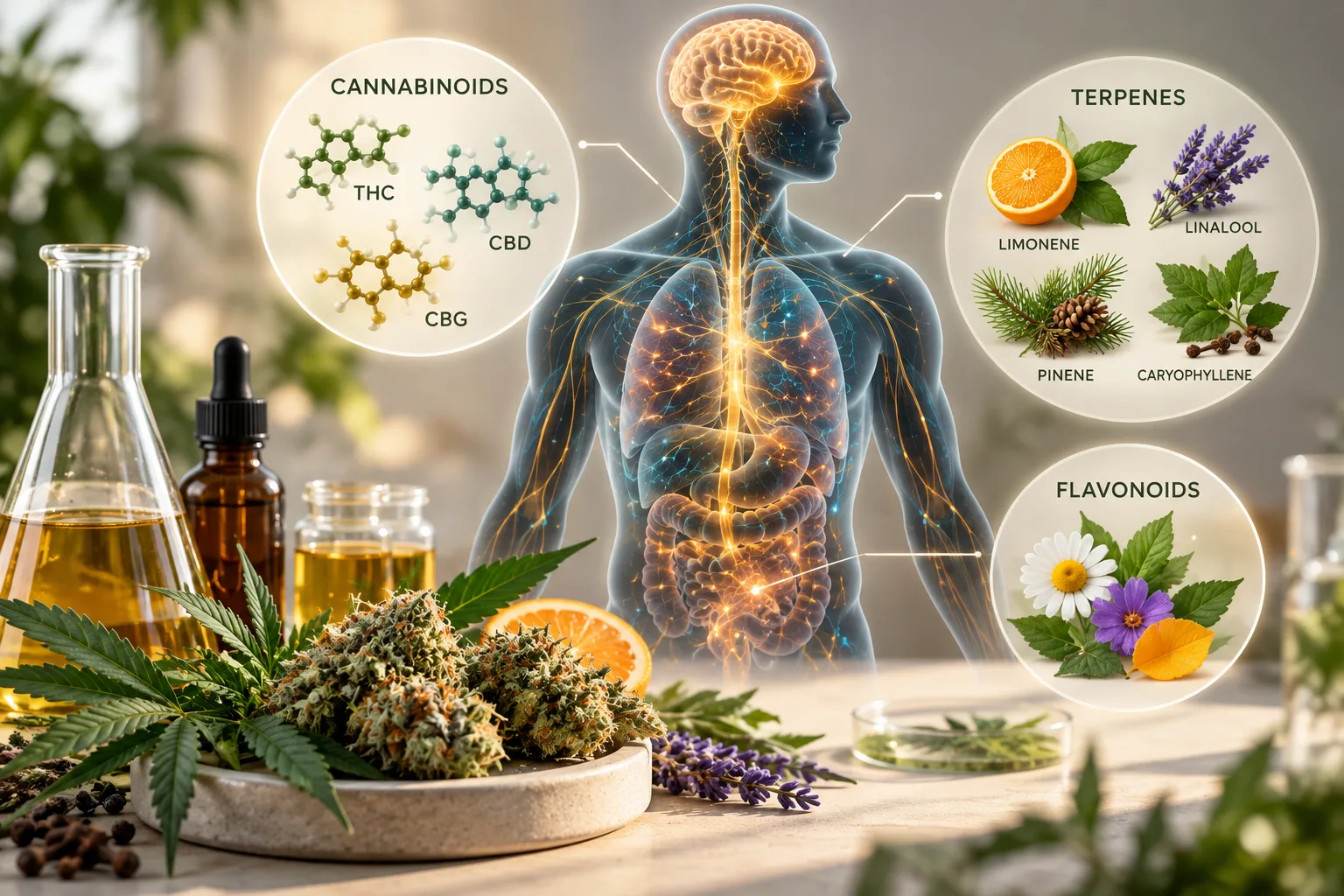
At its simplest, the entourage effect is a synergy hypothesis. It proposes that cannabinoids, terpenes, flavonoids, and other plant compounds influence one another, so the combined result differs from what any single compound would do alone. Sometimes that difference is described as a stronger effect. Other times it’s described as a smoother or more balanced one.
A kitchen comparison makes the concept easier to picture. Salt tastes salty, and caramel tastes sweet. Put them together, though, and salted caramel tastes like neither ingredient on its own, because the salt changes how you perceive the sweetness. The synergy hypothesis suggests something similar may happen in the body when THC, CBD, and terpenes like myrcene or limonene arrive at the same time.
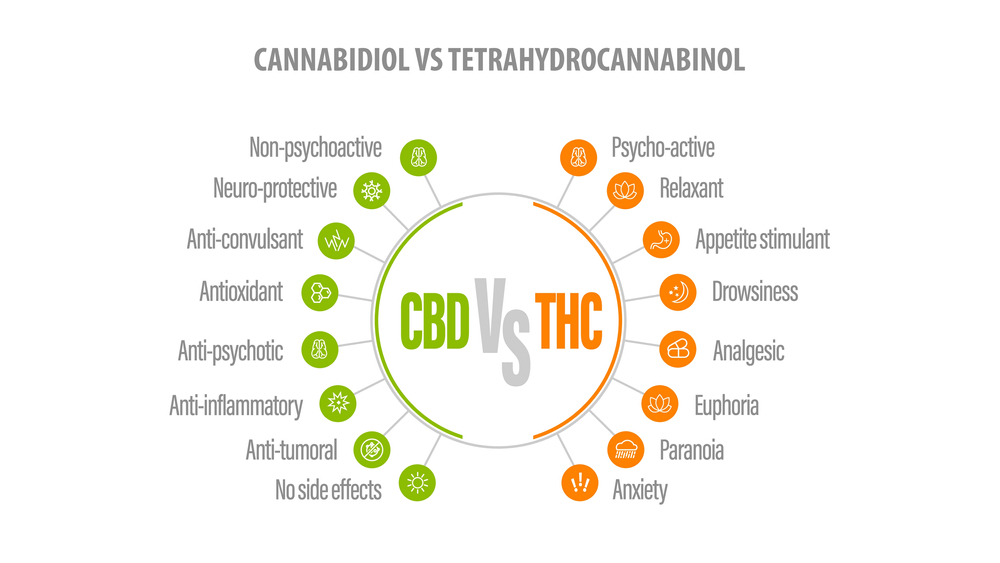
Researchers have proposed two main ways this could work. First, different compounds might act on different targets simultaneously, a bit like musicians playing separate parts of the same song. THC binds strongly to CB1 receptors in the brain, while CBD works more indirectly, influencing enzymes and receptors such as the serotonin receptor 5-HT1A. Second, one compound might change how another is absorbed, broken down, or received by a receptor. Either route could, in theory, make a whole-plant extract behave differently from a purified isolate. For a primer on how THC and CBD differ in the first place, our beginner’s guide to CBD and THC covers the fundamentals.
Where the Idea Came From
A 1998 Study That Wasn’t About the Plant
The term first appeared in a 1998 paper in the European Journal of Pharmacology by Shimon Ben-Shabat, Raphael Mechoulam, and colleagues at the Hebrew University of Jerusalem. Mechoulam was already a towering figure in the field. He’d isolated THC in 1964 and helped identify the body’s own cannabinoids in the early 1990s.
Here’s the detail many summaries skip: the original study wasn’t about cannabis at all. The team found that certain fatty acid compounds the body produces, which did nothing on their own at cannabinoid receptors, boosted the activity of 2-AG, one of the body’s main endocannabinoids. The inactive molecules surrounded the active one like an entourage around a celebrity, amplifying its impact. The researchers raised the broader application to cannabis products almost as a speculative side note, suggesting a similar principle might help explain why herbal medicines sometimes outperform their isolated active ingredients.
How Ethan Russo Brought It to the Plant
The idea moved from the body to the cannabis plant largely through neurologist and researcher Ethan Russo. His 2011 review in the British Journal of Pharmacology, titled “Taming THC,” gathered evidence on how terpenes and minor cannabinoids might shape THC’s effects. Russo proposed specific pairings. For example, he suggested that the terpene pinene might counteract some of THC’s short-term memory effects and that certain terpenes might influence how CBD and THC interact with mood-related pathways.
Russo’s work turned a narrow lab finding into a broad framework, and it’s the version of the entourage effect most people encounter today. It’s worth being clear about what that framework was, though. It was a well-reasoned hypothesis built largely on animal studies, cell research, and known pharmacology, designed to point future studies in a direction rather than settle the question.
Entourage Effect Research: What Holds Up
THC and CBD in the Same Formula
The strongest human evidence involves the pairing of THC and CBD. Nabiximols, sold as Sativex, is a plant-derived oral spray containing roughly equal amounts of THC and CBD. It’s approved in the UK, Canada, and much of Europe for muscle spasticity related to multiple sclerosis, which makes it one of the few whole-plant-derived cannabis medicines to pass formal regulatory review.
One frequently cited example comes from a 2010 trial of 177 people with cancer pain that opioids weren’t adequately controlling. Participants received either a THC:CBD extract, a THC-only extract, or a placebo. About 43% of the THC:CBD group reported at least a 30% reduction in pain, compared with 21% on placebo, while the THC-only extract didn’t separate meaningfully from placebo. That result doesn’t prove terpenes matter, but it does suggest that combining cannabinoids can produce outcomes a single cannabinoid doesn’t.
Full-Spectrum Extracts vs Purified CBD
A 2018 meta-analysis in Frontiers in Neurology pooled observational data from people with treatment-resistant epilepsy. Among those using CBD-rich plant extracts, 71% reported improvement, compared with 46% of those using purified CBD. The extract group also used a much lower average daily dose. That’s a striking gap, although observational data like this can’t rule out other explanations, such as differences in product quality or small amounts of THC in the extracts.
Animal research points in a similar direction. A 2015 mouse study found that purified CBD reduced inflammation only within a narrow dose window, while a full-spectrum extract continued to work as the dose increased. Researchers have also looked at terpenes specifically. A 2020 review in Current Neuropharmacology on terpenes paired with cannabinoids examined how the combination might apply to mood and anxiety research. The authors pointed to clinical data on standardized lavender oil as evidence that certain terpenes have measurable activity on their own, and they concluded that pairing them with cannabinoids deserves controlled clinical study.
In other words, the idea is promising enough to test properly, but it hasn’t been tested properly yet.
Why Some Researchers Remain Skeptical
Terpenes and Cannabinoid Receptors
Much of the popular discussion about entourage effect terpenes assumes they work by tweaking how THC hits cannabinoid receptors. Lab testing hasn’t supported that particular mechanism. A 2020 study in Frontiers in Pharmacology tested common cannabis terpenes, including myrcene, pinene, beta-caryophyllene, and limonene, and found no clear evidence that they altered cannabinoid receptor signaling, either alone or alongside THC.
That finding doesn’t close the case. Terpenes could still act through other pathways, such as serotonin or GABA systems, or through smell, which has a direct line to the brain’s emotional centers. Still, it’s a meaningful result, since it rules out the simplest explanation many product descriptions rely on. Dose is another open question. The amount of a given terpene in a single inhalation is small, and researchers are still working out whether it’s enough to matter pharmacologically.
CBD’s Mixed Record at Softening THC
The claim that CBD “balances” THC shows up everywhere, and the evidence is genuinely mixed. Some earlier studies found that taking CBD before THC reduced paranoia-like reactions in certain participants. However, a 2023 study in Neuropsychopharmacology gave 46 healthy adults vaporized cannabis with varying amounts of CBD and found that CBD didn’t reduce THC’s short-term effects on paranoia-like symptoms or cognition. The ratio, dose, and timing all seem to matter, and results that hold for one combination may not hold for another.
A 2023 scoping review in Biomedicines captured the overall picture well. The authors described the research as still in its early stages, noted that existing studies often use simple methods and reach conflicting conclusions, and observed that most clinical support comes from anecdotal and real-world reports. They also acknowledged the critics’ view that the term gets used mainly as a marketing tool.
So is the entourage effect real? The fairest answer is that it’s a plausible hypothesis with some encouraging evidence, several unanswered questions, and a few specific claims that haven’t held up. That’s less exciting than “yes,” but far more useful.
How to Explore the Entourage Effect on Your Own Terms
Because the entourage effect varies from person to person, your own experience is the most reliable data point. A few habits make that experience easier to interpret.
Start with the certificate of analysis, or COA. Licensed California products include lab testing, and many COAs list minor cannabinoids and dominant terpenes alongside THC and CBD. Two products with identical THC numbers can have very different profiles, and the COA is where those differences appear.
Next, change one variable at a time. If you switch from an isolate to a full-spectrum product, keep the dose, timing, and consumption method consistent. Otherwise, you won’t know whether any difference came from the product’s chemistry or simply from taking it at a different time of day. A few notes on your phone after each session â covering the product, dose, and how you felt â will reveal patterns faster than memory alone.
Consumption method matters too. Inhaled products kick in within minutes, while edibles pass through the liver first and can feel stronger and last longer. Comparing a full-spectrum vape to an isolate gummy tells you more about the delivery method than about whole-plant cannabis.
The entourage effect is best treated as a well-founded idea that science hasn’t finished testing, not as a guarantee printed on a label. What it offers consumers is a better question to ask at the counter. Instead of stopping at “how much THC is in this?”, it’s also worth asking “what else is in here?”, because the real differences between products often live in that second answer.